
Quality of Life in Hypothyroid Patients on Treatment: What a 2024 South African Study Reveals
A 2024 study from Chris Hani Baragwanath Academic Hospital in the Journal of Endocrinology, Metabolism and Diabetes of South Africa finds that many patients with primary hypothyroidism on treatment continue to experience significantly reduced quality of life. The findings reinforce a global pattern: a normal TSH is not the same as a well patient.
Quality of Life in Hypothyroid Patients on Treatment: What a 2024 South African Study Reveals
Reference: JM Mbuyi, S Bhana, R Daya. "Quality of life in participants with primary hypothyroidism on treatment at Chris Hani Baragwanath Academic Hospital." Journal of Endocrinology, Metabolism and Diabetes of South Africa, Volume 29, Issue 2, Pages 54–60. Published online October 2, 2024. doi: 10.1080/16089677.2024.2392977.
A recurring theme in thyroid medicine — documented now across multiple countries, healthcare systems, and patient populations — is that treatment of hypothyroidism with levothyroxine does not reliably restore quality of life to normal. This 2024 study from Chris Hani Baragwanath Academic Hospital in South Africa adds an important international dimension to that body of evidence.
The findings of Mbuyi, Bhana, and Daya are consistent with what has been reported in Dutch, British, and American cohorts: patients with primary hypothyroidism who are on treatment continue to experience meaningfully reduced quality of life compared with the general population. This is not a problem unique to any one country or healthcare system. It is a global pattern that demands a global response.
Why This Study Matters
Most of the research on quality of life in treated hypothyroidism has been conducted in high-income Western countries — the Netherlands, the United Kingdom, Scandinavia, and the United States. The Mbuyi et al. study is significant because it extends this evidence base to a sub-Saharan African academic hospital setting, where patient demographics, comorbidity profiles, and healthcare access differ substantially from Western cohorts.
The fact that the same pattern emerges — reduced quality of life despite treatment, persistent symptoms, impaired daily functioning — across such different healthcare contexts tells us something important: this is not a problem of inadequate healthcare systems or suboptimal prescribing practices in any one setting. It is a fundamental limitation of current standard-of-care treatment for hypothyroidism.
The study was published in the Journal of Endocrinology, Metabolism and Diabetes of South Africa and received 1,158 views — a strong readership signal for a regional journal, reflecting the widespread clinical relevance of the question it addresses.
The Core Finding: Treatment Does Not Equal Wellness
The study assessed quality of life in patients with primary hypothyroidism who were receiving thyroid replacement therapy — the majority on levothyroxine, consistent with standard practice. Using validated quality-of-life instruments, the researchers found that treated hypothyroid patients scored significantly lower than reference populations across multiple domains.
This mirrors the findings of the Dutch survey by Molewijk et al. (2024) that I reviewed recently. Taken together, these two studies — from opposite ends of the world, in very different healthcare settings — tell the same story:
A patient whose TSH has been normalized by levothyroxine is biochemically treated. They are not necessarily well.
The domains most affected in treated hypothyroid patients consistently include:
- Energy and vitality — persistent fatigue that does not resolve with TSH normalization
- Cognitive function — brain fog, memory difficulties, slowed thinking
- Emotional wellbeing — depressed mood, anxiety, emotional blunting
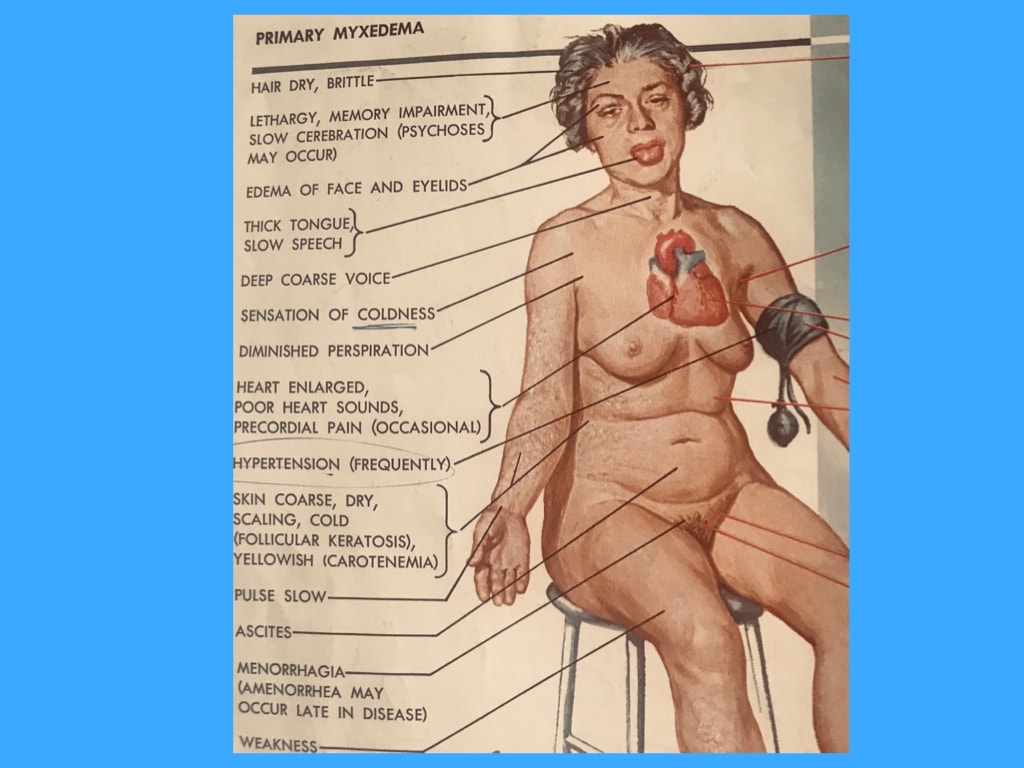
- Physical functioning — reduced exercise tolerance, muscle weakness, cold intolerance
- Social participation — withdrawal from activities, reduced work productivity
The T4 Monotherapy Gap — A Global Problem
The biological explanation for persistent symptoms on levothyroxine is the same regardless of geography: T4 monotherapy does not replicate the full hormonal output of a functioning thyroid gland.
A healthy thyroid secretes both T4 and T3. T3 is the active hormone — the one that drives metabolism, energy, cognition, and mood at the cellular level. Levothyroxine provides only T4, which must be converted to T3 in peripheral tissues. For patients whose conversion is efficient, this works well. For a significant subset — those with genetic variants in deiodinase enzymes, those who have undergone total thyroidectomy, those with certain comorbidities — conversion is inadequate, and T3 levels remain suboptimal even when TSH is normal.
The result is a patient who is biochemically "treated" but physiologically still hypothyroid at the tissue level. Their TSH is normal. Their free T4 is normal. Their free T3 may be low-normal or below normal. And they feel every symptom of hypothyroidism.
This mechanism operates the same way in a patient in Johannesburg as it does in a patient in Amsterdam or Los Angeles.
What the Evidence Is Telling Us
We now have a growing body of international evidence — from multiple continents, multiple healthcare systems, multiple patient populations — all pointing to the same conclusion:
The current standard of care for hypothyroidism is inadequate for a meaningful proportion of patients.
This is not a fringe position. It is the conclusion that emerges from a systematic reading of the quality-of-life literature. The Mbuyi et al. 2024 study is one more data point in a pattern that is becoming impossible to ignore.
What the evidence supports:
-
TSH alone is an insufficient measure of treatment adequacy. Free T3 should be measured in symptomatic patients with normal TSH.
-
The "normal" TSH range is too wide for individual optimization. Many patients feel best with TSH in the lower half of the reference range. Treatment should target the patient's optimal TSH, not just any value within the reference range.
-
Combination T4/T3 therapy is a legitimate option for patients who do not respond to T4 monotherapy. The evidence for combination therapy is not definitive, but it is sufficient to justify a therapeutic trial in symptomatic patients who have failed to improve on optimized T4 monotherapy.
-
Patient-reported outcomes must be part of treatment assessment. If a patient reports persistent fatigue, brain fog, and reduced quality of life despite a normal TSH, that report is clinically meaningful data — not a complaint to be dismissed.
A Message to Patients
If you have been diagnosed with hypothyroidism, are taking your levothyroxine as prescribed, have a normal TSH on your last blood test, and still feel unwell — you are not alone, and you are not imagining it.
The research from South Africa, the Netherlands, and elsewhere confirms that this is a common experience. It does not mean your treatment is failing in the sense that your thyroid disease is uncontrolled. It means that the current standard treatment does not work equally well for every patient.
What you can do:
- Ask your doctor to check your free T3 in addition to TSH and free T4
- Discuss whether your TSH target is optimized for you as an individual — not just "within range"
- Ask whether combination T4/T3 therapy might be appropriate if you continue to have significant symptoms on T4 alone
- Keep a symptom diary to document the specific ways your quality of life is affected — this gives your physician concrete information to work with
- If your concerns are dismissed without investigation, seek a second opinion from a thyroid specialist
My Perspective
After 50 years of treating hypothyroid patients, I have seen this pattern thousands of times. A patient comes in with a normal TSH and a list of symptoms that are textbook hypothyroidism. They have been told they are fine. They know they are not fine.
The Mbuyi et al. study — and the growing international literature it represents — validates what these patients have been saying. The obligation of the treating physician is to listen to the patient, not just read the lab report.
A normal TSH is a starting point. The goal of treatment is a patient who feels well.
Dr. Richard Guttler is a thyroid specialist with over 50 years of clinical experience in Santa Monica, California. He is ranked among the top thyroid specialists in the United States by the American Thyroid Association. The information in this post is for educational purposes only and does not constitute personal medical advice.
Explore Topics
Written by
Dr. Guttler
Clinical Thyroidologist with over 50 years of experience treating patients with thyroid cancer, nodules, hypothyroidism, and hyperthyroidism. Dr. Guttler created these patient education lectures to help people understand their thyroid condition and make informed decisions about their care.

