Quality of Life After RFA for Thyroid Nodules: What the Latest Research Shows
A January 2025 study in Surgery by Collins and colleagues documents meaningful quality-of-life improvements in patients who undergo radiofrequency ablation for thyroid nodules — with less disruption to daily life than surgery. Here is what every patient considering RFA needs to know.

Quality of Life After RFA for Thyroid Nodules: What the Latest Research Shows
Reference: Collins et al. "Quality of Life for RFA-Related Thyroid Nodules." Surgery, Volume 177, January 2025.
Radiofrequency ablation (RFA) has emerged over the past decade as a compelling alternative to surgery for patients with benign thyroid nodules causing symptoms or cosmetic concern. The question patients most often ask me is not whether RFA works — the volume reduction data is well established — but whether it actually makes them feel better. Does it improve their quality of life? And how does it compare to the surgical alternative?
The Collins et al. 2025 study in Surgery addresses exactly these questions, and the findings are important for any patient weighing their options.
What Is Radiofrequency Ablation?
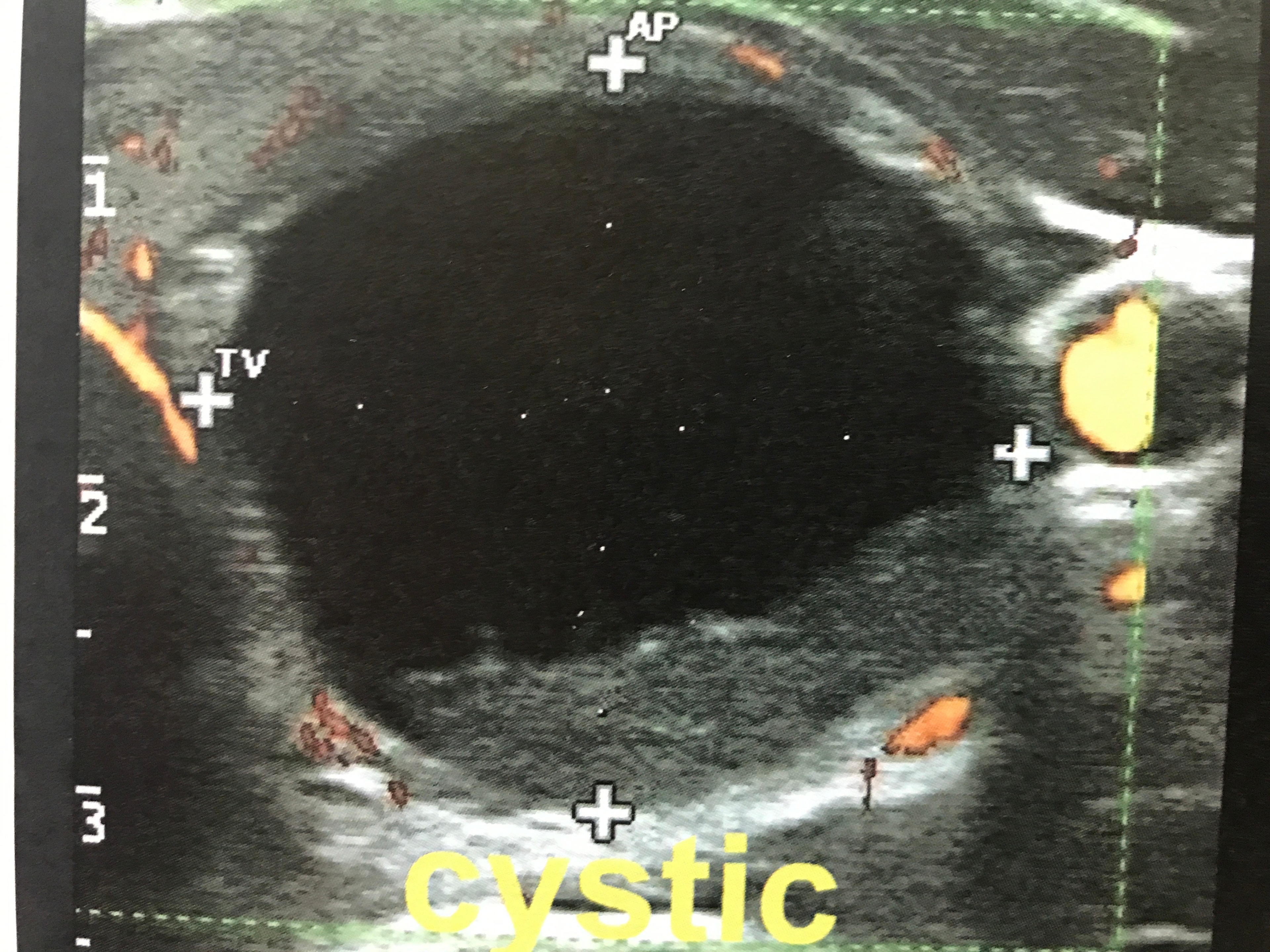
For patients unfamiliar with the procedure: radiofrequency ablation is a minimally invasive, ultrasound-guided technique in which a thin electrode needle is inserted through the skin into a thyroid nodule. Radiofrequency energy heats and destroys the nodule tissue from within, causing it to shrink over the following weeks and months — without any surgical incision, general anesthesia, or hospital admission.
RFA is performed as an outpatient procedure, typically under local anesthesia with light sedation. Most patients return to normal activities within one to two days. There is no scar. The thyroid gland is preserved, and thyroid function is maintained.
I trained directly with Dr. Roberto Valcavi in Italy and Dr. Leonardo Rangel in Brazil — two of the world's leading RFA practitioners — and have been performing the procedure in the United States since 2017. The Collins et al. findings align closely with what I have observed in my own patients.
What the Collins et al. Study Found
The study assessed quality of life outcomes in patients who underwent RFA for thyroid nodules, using validated QoL instruments before and after the procedure. The key findings:
Significant improvement in symptom burden. Patients reported meaningful reductions in the local symptoms caused by their nodules — pressure in the neck, difficulty swallowing, a sensation of something being stuck, and visible neck swelling. These improvements tracked closely with the volume reduction achieved by RFA, which is consistent with prior literature showing that nodule shrinkage drives symptom relief.
Cosmetic concerns resolved substantially. For patients whose primary concern was the visible appearance of a nodule — a lump in the neck that was noticeable to others or to themselves in the mirror — RFA produced significant cosmetic improvement. This dimension of quality of life is frequently underweighted in clinical discussions but is a major driver of patient distress and treatment-seeking.
Psychological wellbeing improved. Beyond the physical symptoms, patients reported reduced anxiety and improved psychological wellbeing following RFA. The relief of knowing the nodule had been treated — without the fear and disruption of surgery — contributed to this improvement. For many patients, the nodule had been a source of ongoing worry; its successful treatment removed that burden.
Daily functioning was minimally disrupted. One of the most clinically significant findings is how little RFA disrupted patients' daily lives. Recovery was rapid, return to work and normal activities was swift, and the procedure did not impose the extended recovery period associated with thyroid surgery. This matters enormously for working patients, caregivers, and anyone for whom a prolonged absence from normal life is not feasible.
Quality of life improvements were durable. The gains in quality of life were not transient. Follow-up data showed that improvements in symptom burden, cosmetic satisfaction, and psychological wellbeing were maintained over time — consistent with the durable volume reduction that RFA achieves.
RFA vs. Surgery: The Quality-of-Life Comparison
The Collins et al. findings are particularly meaningful when placed in the context of surgical alternatives. Thyroidectomy — partial or total removal of the thyroid — has been the traditional treatment for symptomatic benign nodules. It is effective, but it carries a quality-of-life cost that is often underappreciated in pre-operative counseling:
- General anesthesia and its associated risks and recovery
- Surgical scar on the neck — visible, permanent, and a source of significant distress for many patients
- Hypothyroidism — total thyroidectomy requires lifelong levothyroxine replacement; even hemithyroidectomy results in hypothyroidism in a substantial proportion of patients
- Surgical complications — recurrent laryngeal nerve injury (voice changes), hypoparathyroidism (low calcium), bleeding, and infection, though rare, are real risks
- Extended recovery — most patients require one to two weeks before returning to full activity; some require longer
RFA avoids all of these. The thyroid is preserved. Thyroid function is maintained. There is no scar. Recovery is measured in days, not weeks. And the Collins et al. data shows that the quality-of-life outcomes are genuinely good — not merely "acceptable compared to surgery" but meaningfully positive in their own right.
Who Is a Candidate for RFA?
RFA is appropriate for patients with:
- Benign thyroid nodules confirmed by fine needle aspiration biopsy (FNA) — typically two benign FNA results are required before proceeding
- Symptomatic nodules causing pressure, swallowing difficulty, voice changes, or visible neck swelling
- Cosmetically bothersome nodules that the patient wishes to reduce
- Autonomously functioning thyroid nodules (hot nodules causing hyperthyroidism) — RFA can reduce function as well as volume
- Patients who wish to avoid surgery or who are poor surgical candidates due to other medical conditions
RFA is generally not appropriate for:
- Nodules with indeterminate or malignant cytology on FNA
- Nodules with significant calcification that prevents adequate electrode placement
- Patients with certain anatomical considerations that make safe needle placement difficult
A thorough evaluation — including ultrasound, FNA if not already performed, and thyroid function testing — is required before any patient proceeds to RFA.
My Experience With RFA
I have been performing RFA for thyroid nodules since 2017, following direct training with two of the world's foremost experts in the technique. The quality-of-life improvements documented by Collins et al. are consistent with what I see in my own patients.
What strikes me most is not the volume reduction numbers — though those are impressive — but the change in patients' relationship to their thyroid condition. Patients who have lived for years with a nodule that worried them, that they could feel in their neck, that others could see, that prompted repeated biopsies and surveillance — those patients, after a successful RFA procedure, often describe a sense of relief that goes well beyond the physical improvement.
The Collins et al. study puts data behind that observation. Quality of life after RFA is genuinely better — and the procedure achieves that improvement without the disruption, the scar, and the long-term consequences of surgery.
Questions to Ask Your Doctor
If you have a symptomatic or bothersome thyroid nodule and are considering your options, here are the questions I recommend asking:
- Has my nodule been confirmed benign by FNA biopsy — and if not, should it be biopsied before we discuss treatment?
- Am I a candidate for RFA based on my nodule's size, location, and characteristics?
- What volume reduction can I realistically expect from RFA for a nodule like mine?
- How does the physician performing RFA at your institution compare in terms of training and case volume?
- What is the plan if RFA does not achieve adequate volume reduction — would a second treatment be appropriate, or would surgery be recommended?
RFA is not the right answer for every patient with a thyroid nodule. But for the right patient — a confirmed benign, symptomatic nodule in someone who wants to avoid surgery — the Collins et al. data supports it as a treatment that genuinely improves quality of life.
Dr. Richard Guttler is a thyroid specialist with over 50 years of clinical experience in Santa Monica, California. He trained in radiofrequency ablation with Dr. Roberto Valcavi (Italy) and Dr. Leonardo Rangel (Brazil) and has been performing RFA since 2017. He is ranked among the top thyroid specialists in the United States by the American Thyroid Association. The information in this post is for educational purposes only and does not constitute personal medical advice.
Explore Topics
Written by
Dr. Guttler
Clinical Thyroidologist with over 50 years of experience treating patients with thyroid cancer, nodules, hypothyroidism, and hyperthyroidism. Dr. Guttler created these patient education lectures to help people understand their thyroid condition and make informed decisions about their care.