Understanding Hypothyroidism: Symptoms, Causes & Treatment
Hypothyroidism affects millions of Americans, yet many go undiagnosed for years. Learn what causes an underactive thyroid, how to recognize the symptoms, and what treatment options are available.
Understanding Hypothyroidism: Symptoms, Causes & Treatment
Hypothyroidism — an underactive thyroid — is one of the most common endocrine disorders in the United States, affecting an estimated 20 million Americans. Yet despite how widespread it is, many people live with it for years without a proper diagnosis. They're told they're just tired, stressed, or getting older. They're not.
If you've been struggling with unexplained fatigue, weight gain, or brain fog, your thyroid may be at the root of it. Here's what you need to know.
What Is Hypothyroidism?
Your thyroid is a small, butterfly-shaped gland at the base of your neck. It produces two key hormones — T3 (triiodothyronine) and T4 (thyroxine) — that regulate virtually every metabolic process in your body. When the thyroid doesn't produce enough of these hormones, everything slows down.
That slowdown is hypothyroidism.
The condition is diagnosed through a blood test measuring TSH (thyroid-stimulating hormone). When TSH is elevated, it means your pituitary gland is working overtime trying to push a sluggish thyroid to produce more hormone. A high TSH combined with low T4 confirms the diagnosis.
What Causes Hypothyroidism?
The most common cause in the United States is Hashimoto's thyroiditis, an autoimmune condition in which your immune system mistakenly attacks your thyroid gland. Over time, this immune assault damages the gland's ability to produce hormones.
Other causes include:
- Thyroid surgery — removing part or all of the thyroid gland
- Radioactive iodine treatment — used to treat hyperthyroidism or thyroid cancer
- Radiation therapy — to the neck or head for other cancers
- Certain medications — including lithium and amiodarone
- Iodine deficiency — rare in the US but common globally
- Congenital hypothyroidism — some babies are born with an underactive thyroid
Women are five to eight times more likely than men to develop hypothyroidism, and risk increases with age.
Recognizing the Symptoms
Hypothyroidism is often called "the great imitator" because its symptoms overlap with so many other conditions. They also tend to develop gradually, making them easy to dismiss.
Common symptoms include:
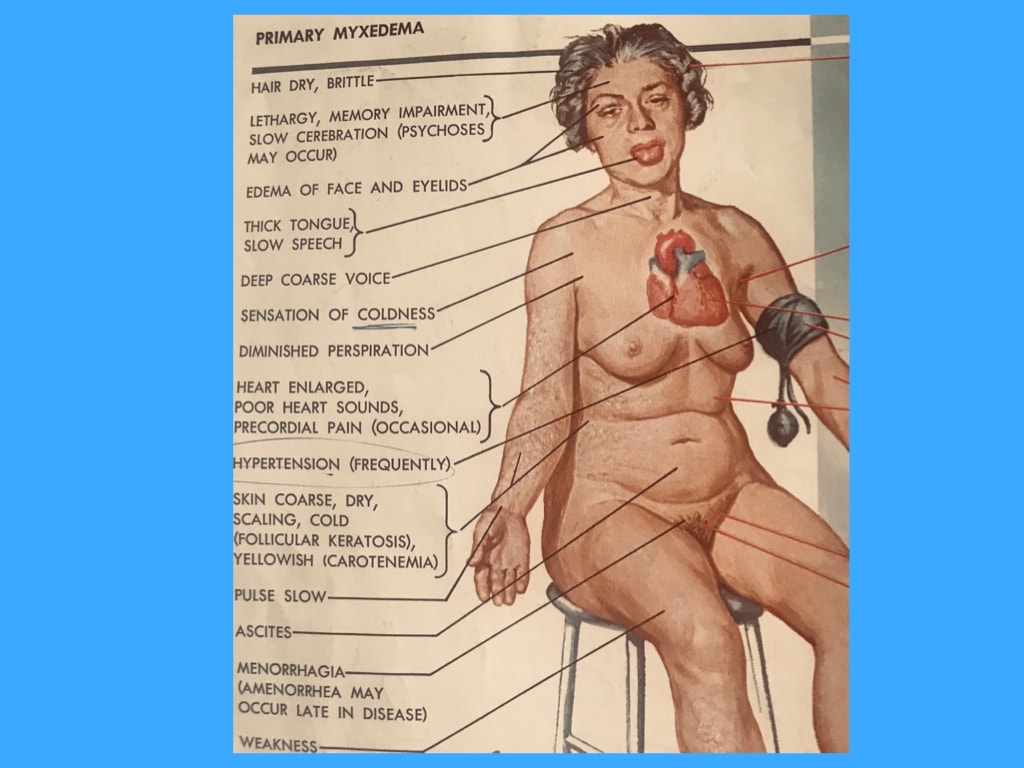
- Persistent fatigue and sluggishness
- Unexplained weight gain
- Feeling cold all the time, especially in the hands and feet
- Constipation
- Dry skin and brittle nails
- Hair thinning or hair loss
- Slowed heart rate (bradycardia)
- Depression and low mood
- Memory problems and difficulty concentrating ("brain fog")
- Muscle weakness, aches, or stiffness
- Puffy face, especially around the eyes
- Hoarse voice
- Elevated cholesterol levels
- In women, heavier or irregular menstrual periods
Not everyone experiences all of these symptoms, and their severity varies widely. Some people have a mildly elevated TSH with no symptoms at all — a condition called subclinical hypothyroidism.
The Emotional Impact
What medical textbooks often leave out is how profoundly hypothyroidism affects quality of life. Patients describe feeling like they're "living in a fog," struggling to get through the day, and losing the energy to do things they once loved.
Depression is common — and it's not just a psychological response to feeling unwell. Thyroid hormones directly influence brain chemistry, including serotonin levels. Treating the thyroid often improves mood significantly, though it may not resolve depression entirely.
The frustration of being dismissed or misdiagnosed adds another layer of emotional burden. Many patients are told their labs are "normal" when their TSH is at the high end of the reference range. This is a real problem. Optimal thyroid function and "technically normal" are not always the same thing.
Treatment Options
The standard treatment for hypothyroidism is daily oral thyroid hormone replacement. The most commonly prescribed medication is levothyroxine (brand names Synthroid, Levoxyl, Tirosint), a synthetic form of T4.
For most patients, levothyroxine works well. The body converts T4 to the active T3 hormone as needed. However, some patients — particularly those who have had their thyroid removed or who have Hashimoto's — don't convert T4 to T3 efficiently. These patients may feel better on a combination T4/T3 therapy using liothyronine (Cytomel) alongside levothyroxine.
Finding the right dose takes time. Your doctor will typically start low and adjust based on follow-up TSH tests every 6–8 weeks until levels stabilize. Once stable, annual monitoring is usually sufficient.
Important considerations for taking thyroid medication:
- Take it on an empty stomach, 30–60 minutes before eating
- Avoid taking it with calcium supplements, iron, or antacids, which can interfere with absorption
- Be consistent — take it at the same time every day
- Don't switch brands without discussing it with your doctor, as bioavailability can vary
Living With Hypothyroidism Long-Term
Hypothyroidism is a lifelong condition for most people. That's not a sentence — it's a reality that, once accepted, becomes manageable. With the right treatment and monitoring, the vast majority of patients live full, active, healthy lives.
The key is finding a doctor who listens, monitors the right labs (not just TSH, but Free T4 and Free T3 when symptoms persist), and is willing to adjust treatment based on how you feel — not just what the numbers say.
You deserve to feel well. Don't settle for "your labs are normal" when you still feel terrible. Advocate for yourself, ask questions, and keep looking until you find the care you need.
Dr. Guttler spent 50 years as a private thyroid medical specialist. The information on this site is for educational purposes and does not constitute medical advice. Always consult your physician for diagnosis and treatment.
Explore Topics
Written by
Dr. Guttler
Clinical Thyroidologist with over 50 years of experience treating patients with thyroid cancer, nodules, hypothyroidism, and hyperthyroidism. Dr. Guttler created these patient education lectures to help people understand their thyroid condition and make informed decisions about their care.