
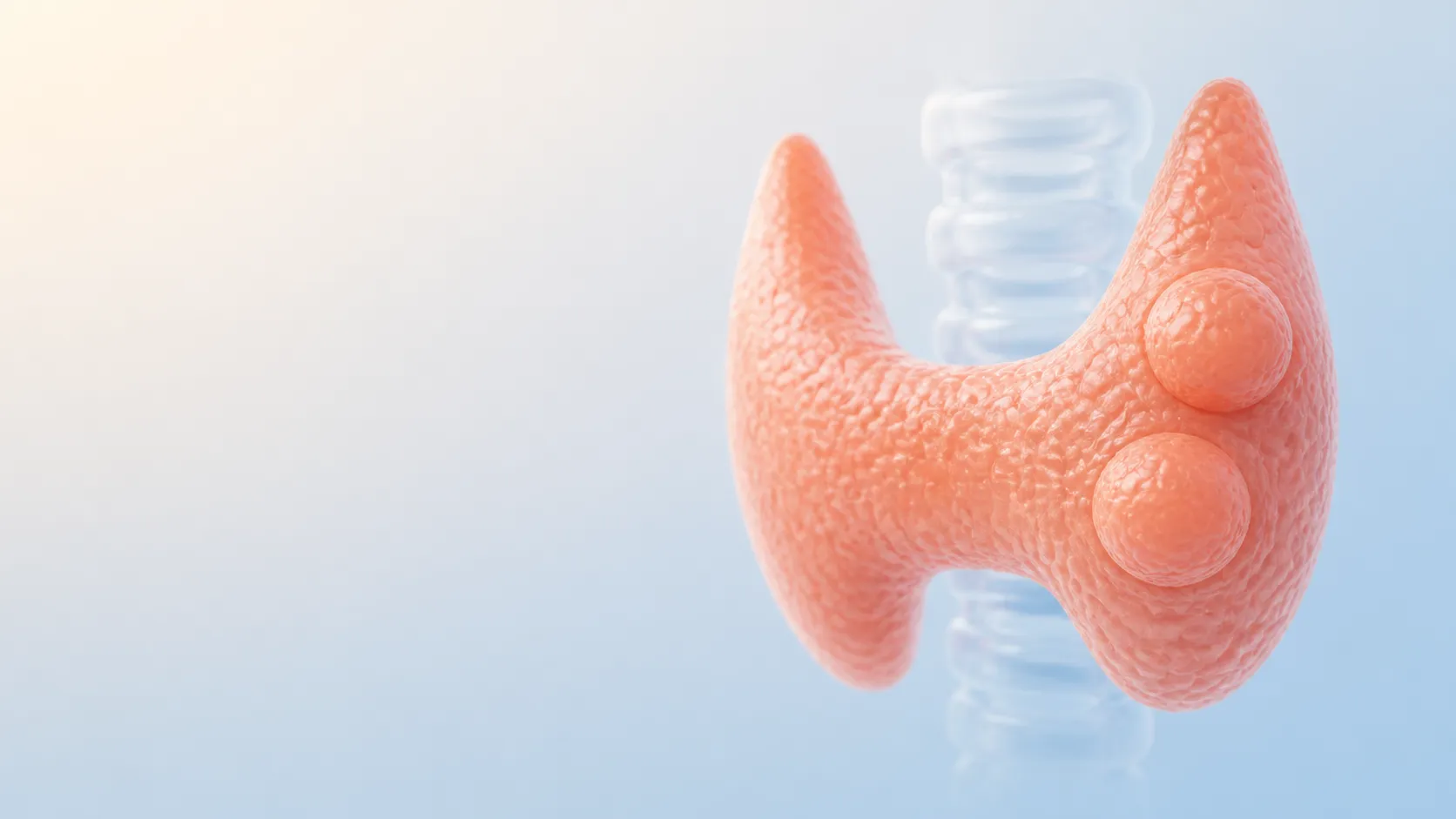
What is a thyroid nodule?
A thyroid nodule is a small lump or localized growth in part of the thyroid gland. It differs from a goiter, which is an enlarged thyroid gland. However, an enlarged thyroid gland may contain one or more nodules.
Nodules are very common. They can be very small or grow to several centimeters, and more than one nodule may be present in the same gland. Most thyroid nodules are benign, but they should be properly evaluated.
Symptoms and discovery
Most thyroid nodules cause no symptoms. They are often discovered during a physical examination or during an ultrasound, CT scan, or MRI performed for another reason.
Some nodules can press against the neck and cause:
- A sensation of a lump in the throat
- Difficulty swallowing
- Hoarseness or a change in the voice
- Coughing, neck pressure, or difficulty breathing
A nodule can sometimes produce excess thyroid hormone. This may cause a fast heart rate, weight loss, nervousness, sweating, diarrhea, or tremors.
How thyroid nodules are evaluated
A clinician will take a careful history, including possible radiation exposure, perform a neck examination, and order blood tests to check the activity of the thyroid gland.
Ultrasound is used to measure the nodule, examine its characteristics, and check for other nodules or abnormal lymph nodes. Learn what a thyroid ultrasound shows and how to read the report. Not every nodule requires a biopsy. The decision depends on the ultrasound appearance, size, thyroid blood tests, symptoms, and medical history.
A nuclear thyroid scan is not a first test for every nodule. It may be useful when TSH is low or an overactive nodule is suspected.
Fine-needle aspiration
When a biopsy is needed, ultrasound-guided fine-needle aspiration, commonly called FNA, removes a small sample of cells from the nodule for examination. Read what to expect before, during, and after a thyroid FNA biopsy.
The result may be benign, nondiagnostic, indeterminate, suspicious for cancer, or malignant. An indeterminate result does not automatically mean cancer. Depending on the individual findings, the next step may include another biopsy, molecular testing, monitoring, or surgery.
Monitoring and treatment
Treatment depends on the cause of the nodule. If a biopsy shows benign cells and the nodule is not causing problems, it may simply be monitored with physical examinations and ultrasound.
Treatment may be considered if a nodule causes symptoms, produces excess thyroid hormone, has concerning test results, or changes in a clinically important way.
Older thyroid.com articles discussed thyroid hormone suppression to prevent nodule growth. Current guidance does not recommend this treatment for patients with normal thyroid function and nodular disease.
What if the nodule is cancerous?
Treatment depends on the cancer type, size, location, lymph-node findings, and other risk factors. Surgery remains an important treatment, but selected small, low-risk thyroid cancers may sometimes be monitored through active surveillance under specialist care.
Minimally invasive options
Selected benign nodules may be treated without conventional thyroid surgery. Ethanol ablation may be appropriate for certain cystic or predominantly cystic nodules. Radiofrequency ablation may be considered for selected solid benign nodules that cause symptoms or a visible neck lump.
These treatments require careful patient selection, confirmation that the nodule is benign, and a clinician trained in the procedure. Learn more in the ethanol ablation guide and the radiofrequency ablation guide.
Questions to ask your clinician
- What did my ultrasound show?
- Do I need a biopsy?
- What does my biopsy result mean?
- Can the nodule be safely monitored?
- Would molecular testing be useful?
- Is a minimally invasive procedure appropriate?
- Should I see a thyroid specialist?
Sources and medical review
Medically reviewed by Richard B. Guttler, MD, FACP, FACE, ECNU · September 2026
This guide builds on Dr. Guttler's earlier thyroid nodule education, with updates supported by the medical references below.